The No-Profit-Split Passing Service, Explained
Most passing services are priced to look cheap on the way in and expensive on the way out. A no-profit-split service flips that: one fee now, and everything you earn afterwards is yours. It sounds like a small distinction. Across a funded lifetime it is often the largest cost difference in the entire decision.
What "no profit split" actually means
It means the provider's income ends when you are funded. They charge a fee to pass your evaluation, and then they have no further claim on your trading. A split-based provider, by contrast, keeps a percentage — commonly 20% to 50% — of every profit you withdraw, forever, as long as you use their funded account. The first model pays for a result. The second rents you a result for the rest of your career.
| Withdrawals over 12 months | 30% split provider | Flat no-split provider |
|---|---|---|
| $10,000 | $3,099 ($99 + $3k) | $220 |
| $30,000 | $9,099 | $220 |
| $50,000 | $15,099 | $220 |
The gap widens with every withdrawal. This is why the "cheaper" split-based fee is a mislabel: it is the most expensive model the more successful you become.
Why split-based pricing persists
It is not irrational for either side. For the provider, a split turns a one-off service into a recurring revenue stream, which is a better business. For some traders, it means paying nothing more if they never withdraw — a kind of insurance against failure. If you genuinely expect to make no withdrawals, a split costs you less. But if you are paying a service to get a funded account, the entire premise is that you intend to withdraw. Optimising for the scenario where you never do is an odd way to buy.
The alignment test
Ask what each pricing model rewards. A split-based provider is paid more when you earn more, so it is neutral-to-positive about your success — but it also profits from keeping you funded for a long time. A flat-fee provider is paid once, so its only incentive is to deliver the funded account it promised. Both can work; know which incentive you are buying into.
The three questions to ask any provider
Do you take a share of my payouts?
If yes, ask for the exact percentage and calculate it against your expected withdrawals.
Do you charge again if the evaluation fails?
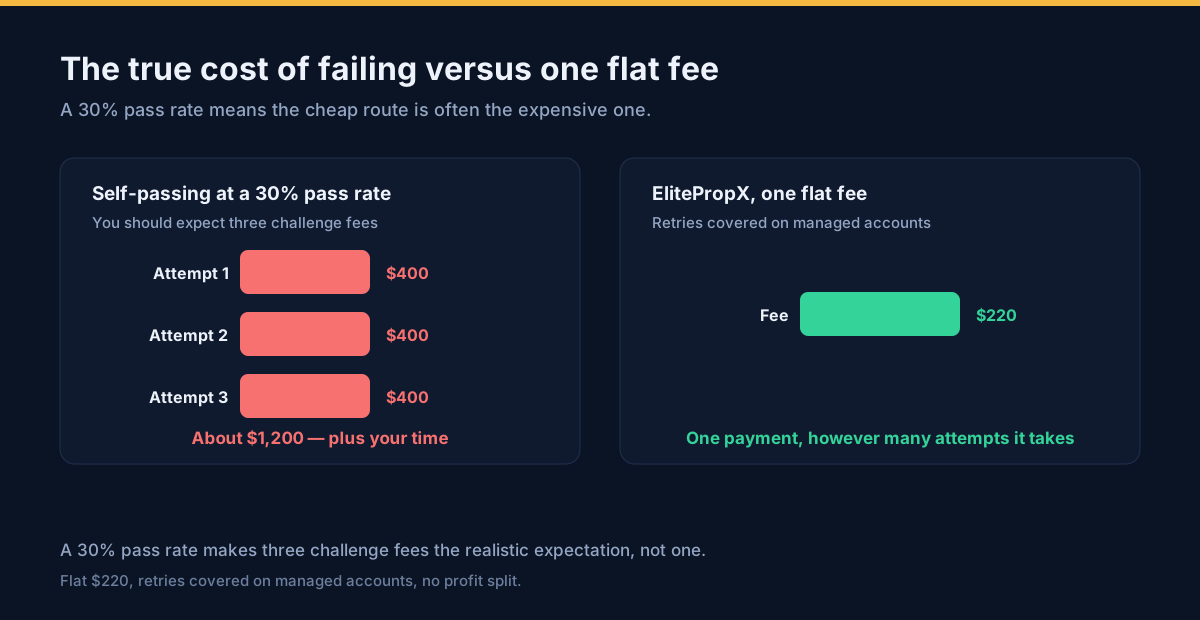
Retry charges are the second hidden cost. A no-split service should also cover retries, or the total is not really capped.
Is the price fixed for any account size?
A flat fee across sizes means you are not penalised for wanting a larger account.
When a split might still make sense
If you are highly uncertain whether you will ever withdraw, or if a split provider is the only one who can pass your specific firm, the model may be the pragmatic choice. Honesty requires saying that. But for the typical trader whose goal is funded income, a flat no-split service is cheaper the moment the first withdrawal lands — and comfortably cheaper thereafter.
Our position
ElitePropX is a flat-fee, no-split service. Our flat-fee prop firm passing service charges $220 per evaluation regardless of account size, retries on managed accounts are covered, and we take nothing from the funded account. We think that is the structure a passing service should have: paid for the result, then out of your way. Compare it to any split-based alternative on total cost of ownership, and the maths will make the case better than we can.
Frequently Asked Questions
What is a no-profit-split passing service?
Why do some services take a profit split?
Is a no-split service more expensive upfront?
How much does a profit split actually cost?
Does ElitePropX take a profit split?
Have a question before you commit?
Ask us anything about your firm, your account size or whether a passing service suits you. We answer directly on Telegram — no forms, no queues.
Ready to pass your prop firm challenge?
Flat $220 per evaluation — we trade it for you and hand over a funded account. No hidden cuts, no monthly fees. Message us on Telegram and we will answer in minutes.